THE INQUEST (1875 Daily Gazette for Middlesbrough, North Yorkshire, England)
An inquest was held at the Queen Hotel, South Bank, this (Friday) morning, before Mr. Dent, deputy coroner.
Thomas Smalley, fireman, of the Cleveland Iron works, said that on Thursday morning he was at the South Bank Ironworks about half past eight. He was about 20-yards from the cabin. He heard the explosion and saw the roof of the cabin fall in. The little girl, who was close by, went a yard or two and then dropped down. Witness ran near the cabin and saw two men pull the deceased man out. The little girl was lying with her head off. The man was alive when he was recovered from the ruins of the cabin, though much disfigured about the face. A number of people ran up, and witness then left to go back to his work. He had never seen the deceased man and girl before.
Charles Morrow, a Frenchman, furnace blaster at the South Bank Ironworks, said he knew Charles Rochat, he was 25 years old. He was a furnace blaster. Witness worked with him. Yesterday morning at eight o’clock they were at work together. Deceased told witness to go and light the fire in the cabin, and deceased directed witness to go and fetch a barrow full of slag while he (deceased) dried the dynamite. The dynamite was wanted for clearing away a lot of iron that had become solid near the furnaces. The dynamite had frozen through the night and they were compelled to put it near the fire to dry it, it is generally said a certain distance from the fir, on a sheet of iron or bricks, until it is warm, and it is turned over and over. That is only when it is frozen. While the deceased man was laying it down to dry, witness had gone for the barrowful of clay. There was only sufficient dynamite for one blast dried. It takes five or six cartridges for one blast. The dynamite freezes very readily. It will freeze by being carried from one place to another in frosty weather. Witness saw the roof of the cabin fly up in the air and then fall in. He saw the little girl pass where he was while he was getting clay and pass towards the cabin. He did not see her near the cabin as the explosion caused a great cloud of dust. He ran towards the cabin and saw the deceased man fast, who cried out twice, “Pull m out.” Witness and another man got the deceased out. Deceased was much disfigured about the face. He spoke and asked for a drink. He died in a very short time. Witness did not see the little girl after she was killed. The deceased and another man had a contract for the work. The deceased had a license for the use of dynamite.
Christopher Machin, labourer at the slag bank, about a quarter of a mile from the South Bank Ironworks, said the deceased girl, Sarah Ann Smith, was his step-daughter. She was 12 years and 10 month old. Yesterday morning she was taking witness’s breakfast. A little boy went to witness and told him of the accident. He went to the place at once, and found his step-daughter dead. The deceased man Rochat had lodged with him at one time.
Thomas Pratt, a boy of nine years old, the step brother of the deceased girl stated he went with their fathers breakfast. They saw the deceased Charles Rochat, in the cabin. His sister spoke to Rochat and looked into the cabin, and witness walked on. Witness had got ten yards in advance when he heard a noise and saws a quantity of smoke. He looked round and saw a man carrying her away. A piece of slag struck witness on the thigh.
The instructions of the British Dynamite Co., for the use of dynamite, were read, and showed that the deceased , Rochat, had gone contrary to the instructions by having the dynamite before the fire.
The jury returned a verdict of “accidentally killed” and strongly urged the witness Morrow and all concerned in the use of dynamite to pay particular attention to the printed instructions. Morrow stated that he would take care on his own account to do so in the future, and would urge all his mates to do the same. The deceased, Rochat, had been their foreman, and they had obeyed his instructions.
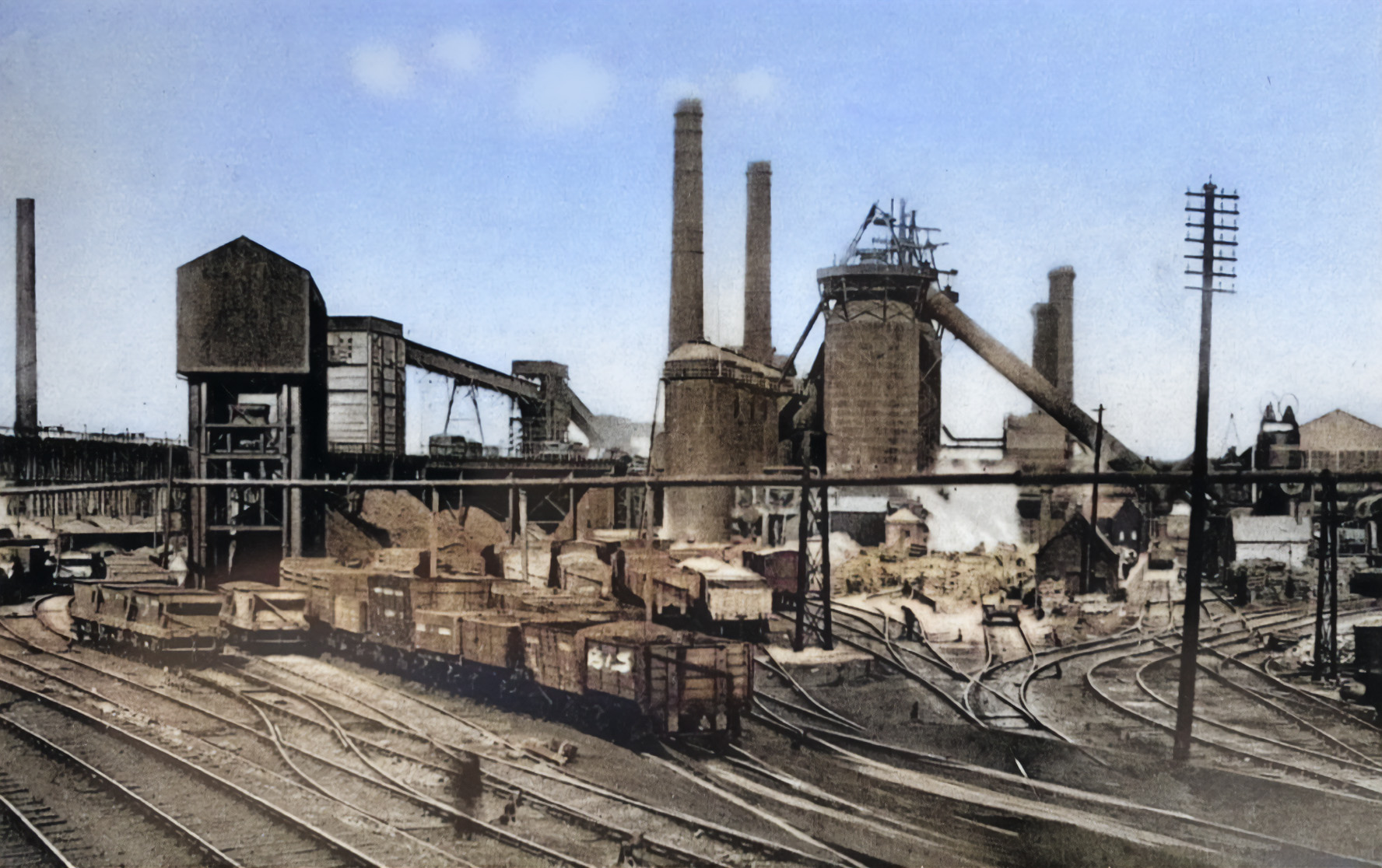
Cargo Fleet Iron Works
MANCHESTER EVENING NEWS SATURDAY 30TH AUGUST 1884
MURDEROUS ATTACK ON A WOMAN
Yesterday, at Middlesbrough, Christopher Machin was brought up on remand charged with cutting and wounding Jane Ann Ellis, of Coral Street, South Bank, on the 1st August. Mr Harrop, of York appeared for the prisoner. The prosecutrix, who in a weak condition, stated that she was in her house folding clothes when she heard some person call, “Harry, Harry,” in the adjoining house. Harry was the son of Mrs Machin. She went to the house and saw the prisoner, who had not lived with his wife for some time, in the passage. He said, “As the one is not here that I want to murder I will murder you.” He put his arm around her neck, and she saw the glimmer of a knife, which he thrust into her body. She tried to liberate herself, and he ran the knife in her head. She got away from him and ran into the kitchen. Prisoner pursued her, and she seized a brush to defend herslf, but from loss of blood fell on a chair. A lodger named Smith came and the prisoner went away, but was afterwards apprehended by Sergeant Nicholson, who stated he was drunk when arrested, and when charged the following morning said he knew nothing about it. Dr. Glen stated that he found prosecutrix suffering from a wound in the left side of the abdomen and a wound on the back of the head. He dressed the wounds and sent the prosecutrix to the Cottage Hospital. The prisoner was committed for trial at the York Assizes.
YORKSHIRE WINTER ASSIZES - YORK CASTLE - Friday
(Before Baron Pollock)
FELONIOUSLY WOUNDING AT NORMANBY.
CHRISTOPHER MACHAN (47), Labourer, pleaded guilty to having unlawfully and feloniously wounded Annie Ellis, at Normanby, on the 1st August, 1884. – Mr Kemp, who defended, addressed his Lordship in mitigation of the offence, and said that no ill-feeling existed between Machan and the woman. The prisoner between the 21st June and 22nd July was in hospital, and as the offence was committed on the 1stAugust it was clear he was not in a very robust condition. On the 1st August Machan got drunk. It was while in this state that he entered his house, and finding Ellis there committed the offence with which he was charged. His conduct was, doubtless, attributable to drink, which would have a serious effect upon him while in his weakened health. As the prisoner had expressed deep regret, he asked on his behalf for the clemency of the Court. – His Lordship said it was clear that the prisoner had by taking drink reduced himself to the position of a beast, and he therefore urged him to abstain from a thing which caused so many of these cases. Prisoner would be sentenced to Eight months’ hard labour.
Eight month hard labour in York Castle would comprise of a treadmill, ironically this may not be viewed as hard labourer for someone who is use to working in an Iron Foundry.
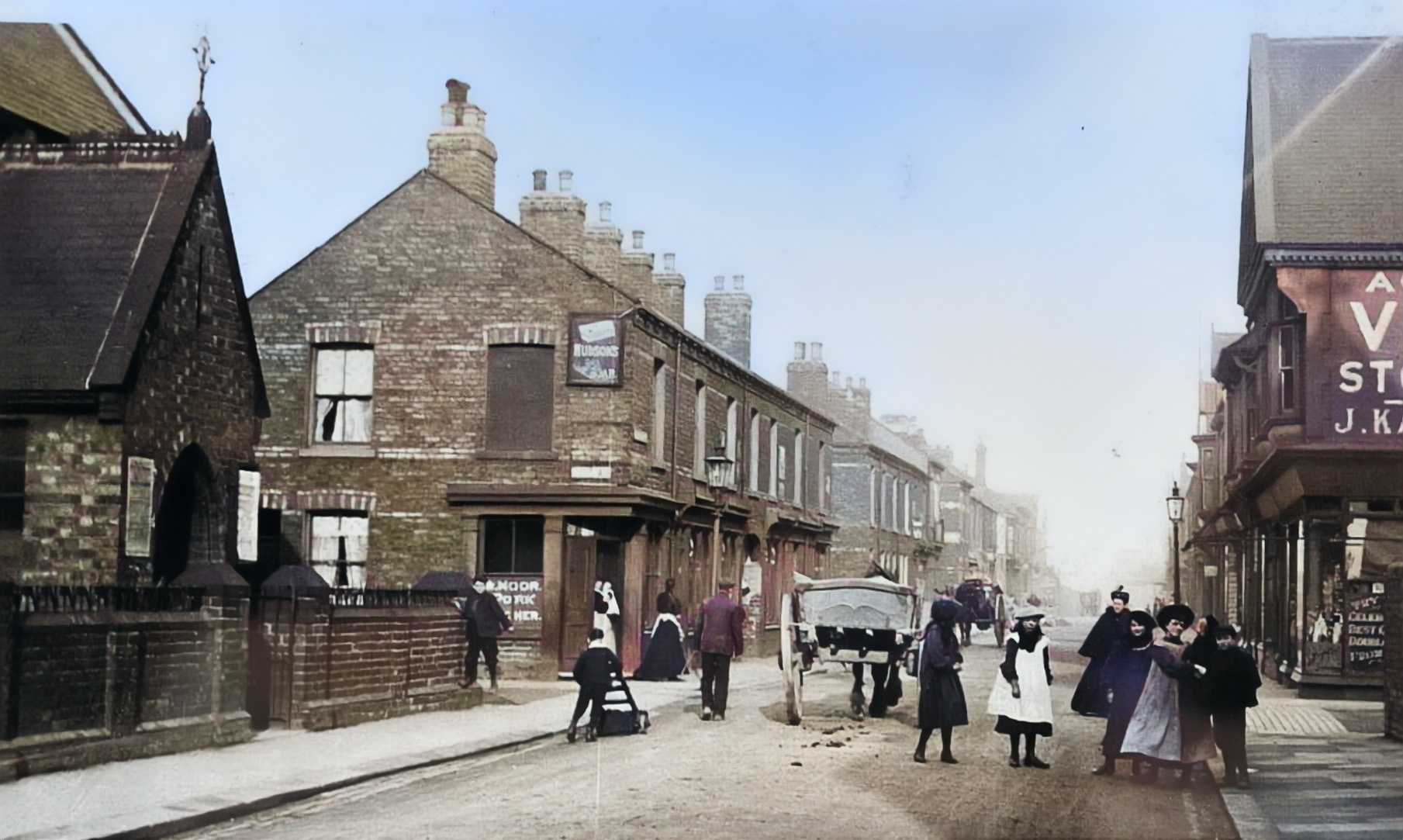
The following is Middlesbrough Road, South Bank. Henry Machan and Elizabeth Green lived at Upper Oxford Street before they married. When they married based on birth and death cirtificates they moved to 4 Middlesbrough Road, South Bank until Henry's death.
North Eastern Daily Gazette October 28,1909
MACHIN On October 27, at 18 ½ Princes Street South Bank, Henry, beloved husband of Elizabeth Machin Internment at Eston, Sunday at 1.40 Friends kindly invited.